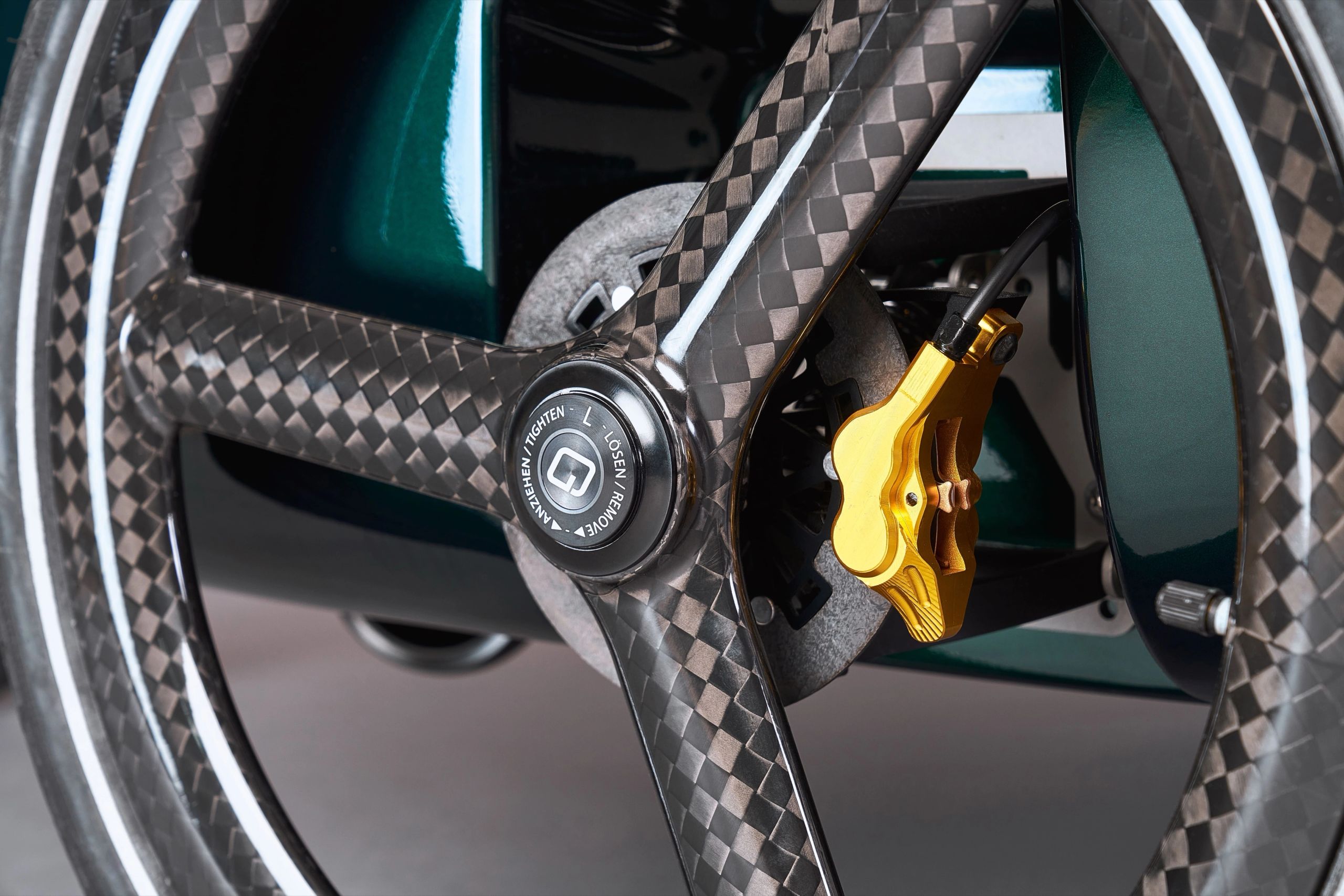
Close-up on the Mono-Q: carbon wheel with centre lock, behind it the carbon brake disc and a gold brake caliper

Carbon bike trailer

From the first line to the finished carbon shell that protects your children.

What lies within.

What you see in a Mono‑Q is its form. What you do not see are the fifteen years of work inside it.

Behind it are engineers for whom precision is not negotiable: from racing-car building, from Ferrari, from Mercedes-AMG. And parents who know whom they are protecting. Follow the Mono-Q from the first block of foam to the last red harness.

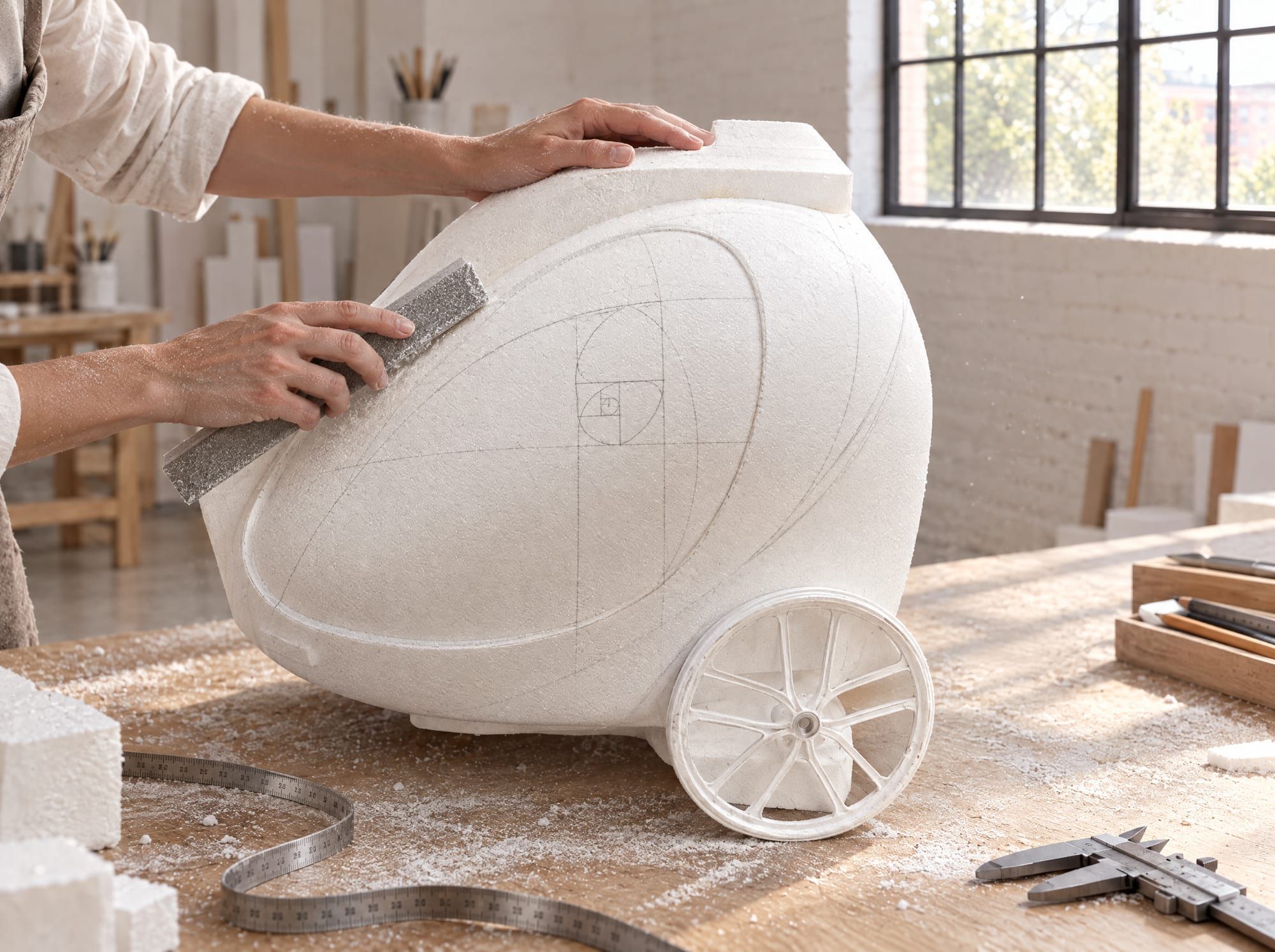
Two hands sand the white full-size rigid-foam model of the shell, fine pencil lines on its surface

1:1 modelled in rigid foam

The form

In the beginning there is only a white block. And a sense of a line that is right.

With a sanding block, the rigid foam is taken down millimetre by millimetre, at full size, until the proportions follow the golden ratio. Parents study every model and ask what parents ask: Where does my child sit? Can they see out? Can I reach the harness easily? Pass after pass, the egg shape emerges.

“The safest place for a small being is an egg.”

Dominik Dierkes, Founder
Model
Rigid foam, full size
Proportion
Golden ratio
Consulted
Parents, mothers above all
Result
Egg shape, like a helmet
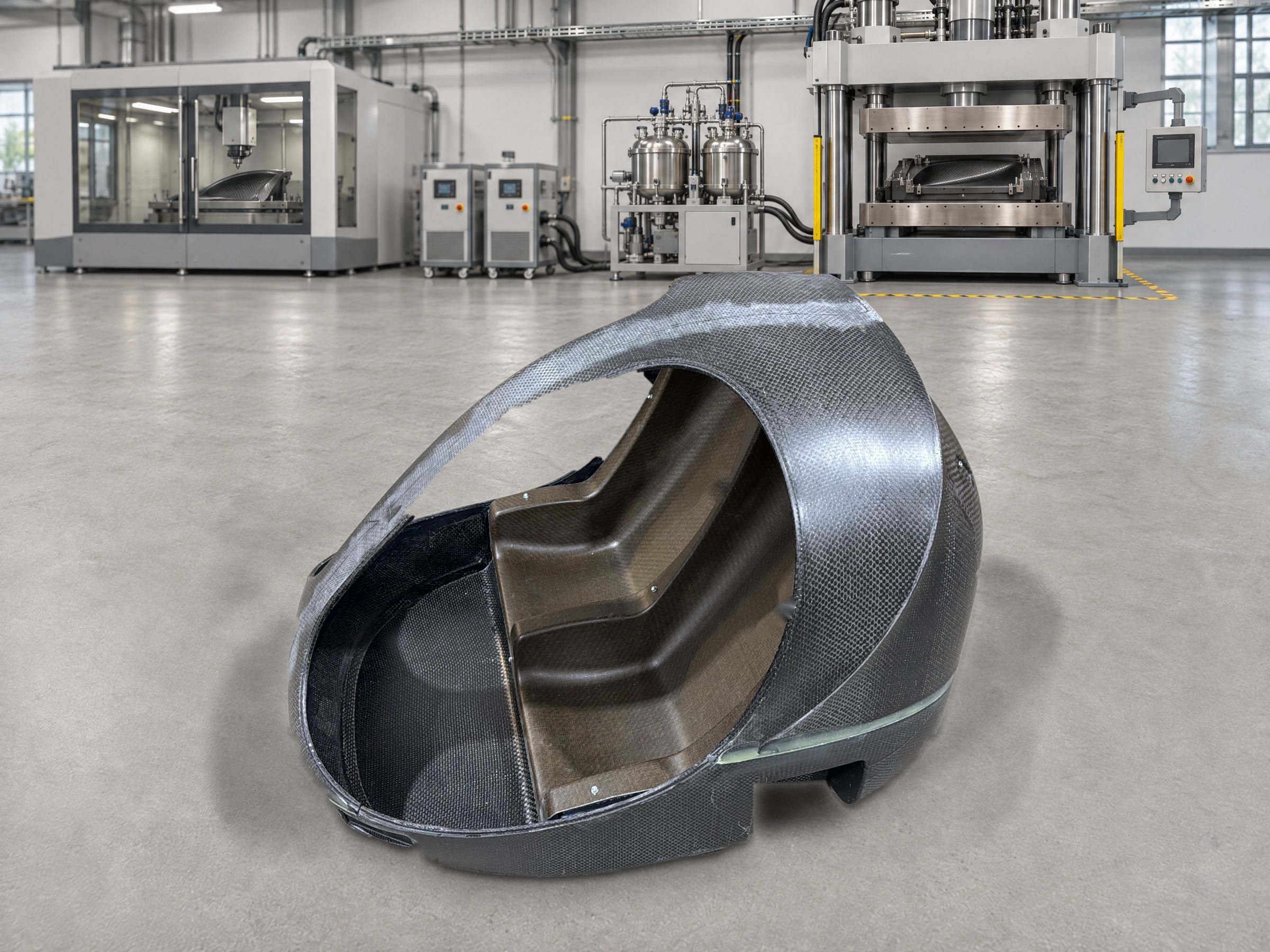
Raw Mono-Q shell in exposed carbon on the concrete floor of a carbon composite plant, behind it a hydraulic press with a mould, a resin dosing unit, mould temperature controllers and a CNC trimming cell

2010 the first monocoque

The shell

What protects the driver in a racing car protects your children here.

Dominik Dierkes learned his craft where every mistake shows at once. He built his first monocoque in 2010 for a Formula Student racing car, and later the first infused, FIA-certified monocoque for the Revolution A-One sports prototype. The Mono-Q’s shell is made by wet pressing: pure carbon fibre around a core of high-strength EPS that spreads the energy of an impact across the whole surface. The result is a shell in one piece, with no hinge.

“The safest place for an adult is a monocoque.”

Dominik Dierkes, Founder
First monocoque
Formula Student, 2010
Motorsport
2014 to 2023
Homologation
FIA, Revolution A-One
In the Mono-Q
One piece, no hinge
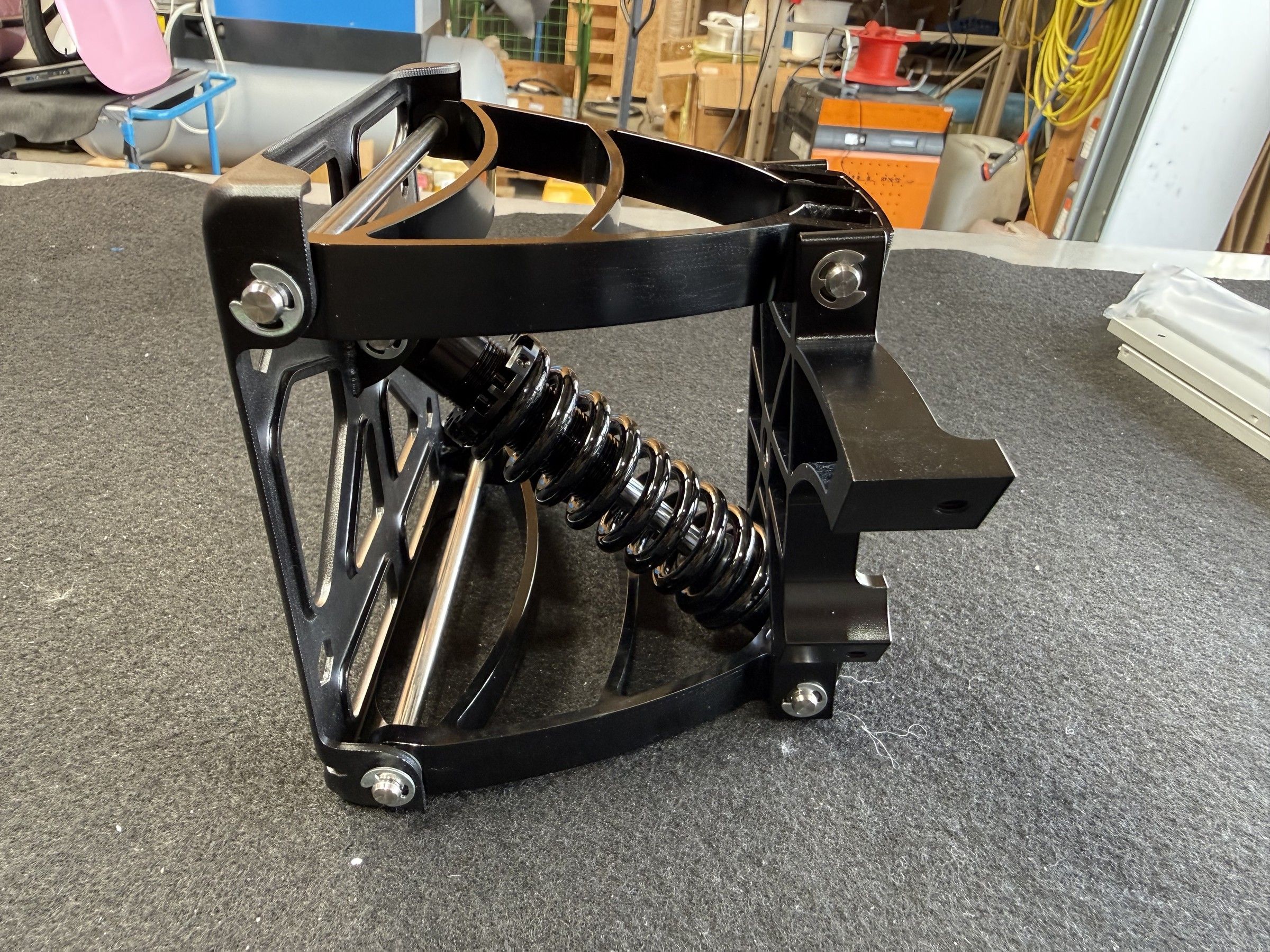
The Mono-Q’s suspension module, black anodised, with strut and coil spring, on the workshop floor

27 years of car body engineering

The engineering

Every screw has a name. Michael Büscher knows them all.

He spent 27 years developing car bodies, for Ferrari and Mercedes-AMG among others. On the Mono-Q he is responsible for development, testing and production. He matches tolerances, materials and manufacturing so precisely that every detail works in series production. Precision as you know it from supercar engineering, for the most important seats.

“What drew me to Mono-Q? The idea of safety, and with it, hopefully, saving children’s lives.”

Michael Büscher, Engineering
Karmann
Body-in-white, 1998 to 2008
Ferrari
458 Italia and 458 Spider
Mercedes-AMG
Head of body-in-white, to 2025
Mono-Q
Since 2026
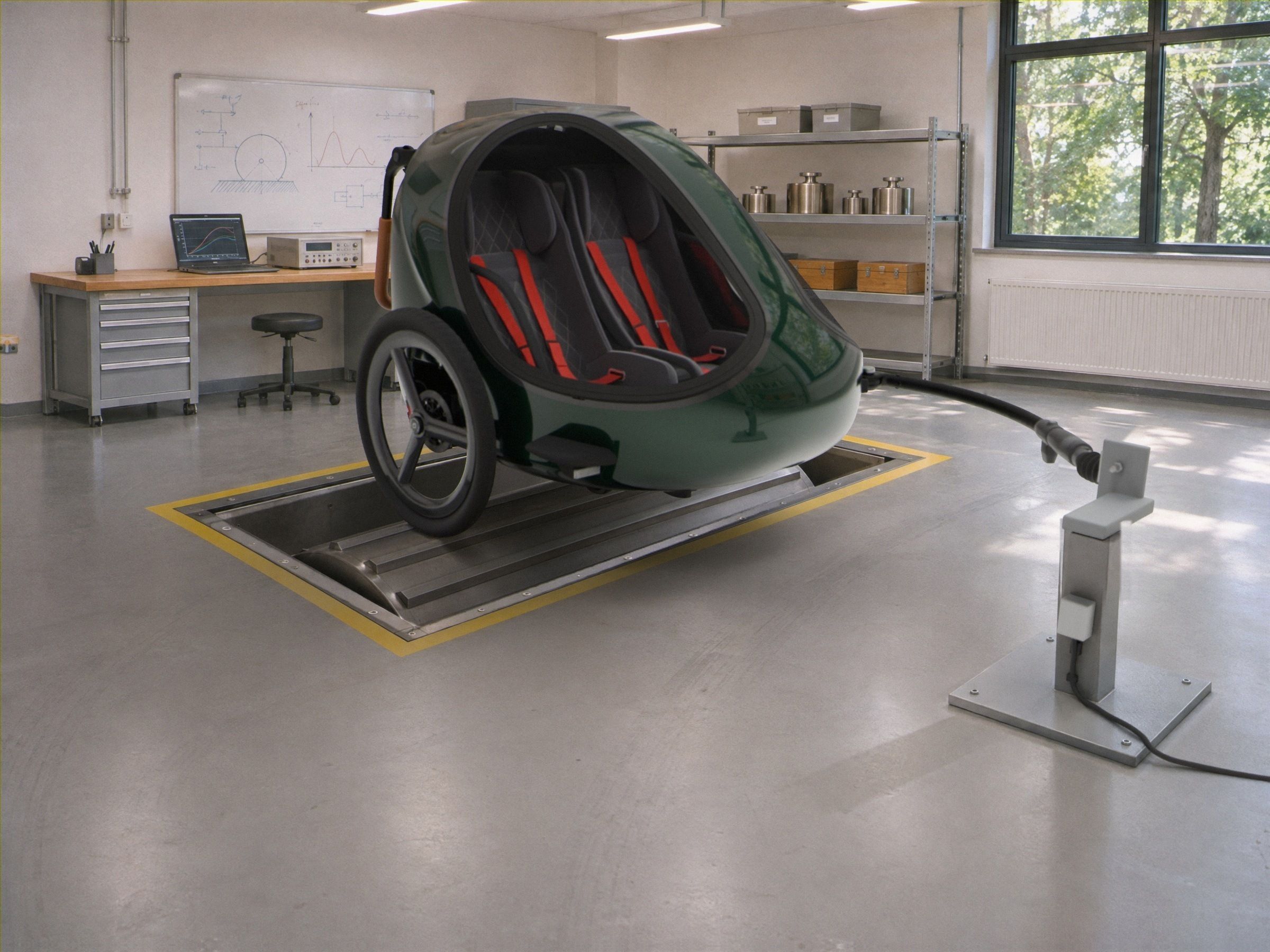
The Mono-Q as a bike trailer on a drum test rig in a bright test lab: the wheels stand on a floor-mounted steel drum with obstacle cleats, the drawbar is coupled with its Weber coupling to a test post with a load cell, behind it a workbench with a laptop, a whiteboard and test weights

250 % of service life

The test

A buggy’s whole lifetime in two days. The complete Mono-Q lasts 250 per cent of it, with 20 per cent overload.

Before a Mono-Q comes to you, it has been through a great deal: an endurance test over two and a half times its service life, tests for corrosion, water and electronics, and the crash test at the independent test laboratory CTS Münster. Studies assume 7 to 12 km/h in city traffic. We tested at 30 km/h, without braking, from behind and from the side, and the Mono-Q passed with flying colours: all values stayed below critical levels. Even Formula 1 tests its racing cars only a little faster: at 39 km/h at the rear, 36 km/h at the side.

“We thought ahead to every conceivable case. The Mono-Q is ready for anything.”

Michael Büscher, Engineering
Test rig
Rollers with obstacles
Crash test
Rear and side, 30 km/h without braking
Failure analysis
Every conceivable cause
Standard
DIN EN 15918, Type C2
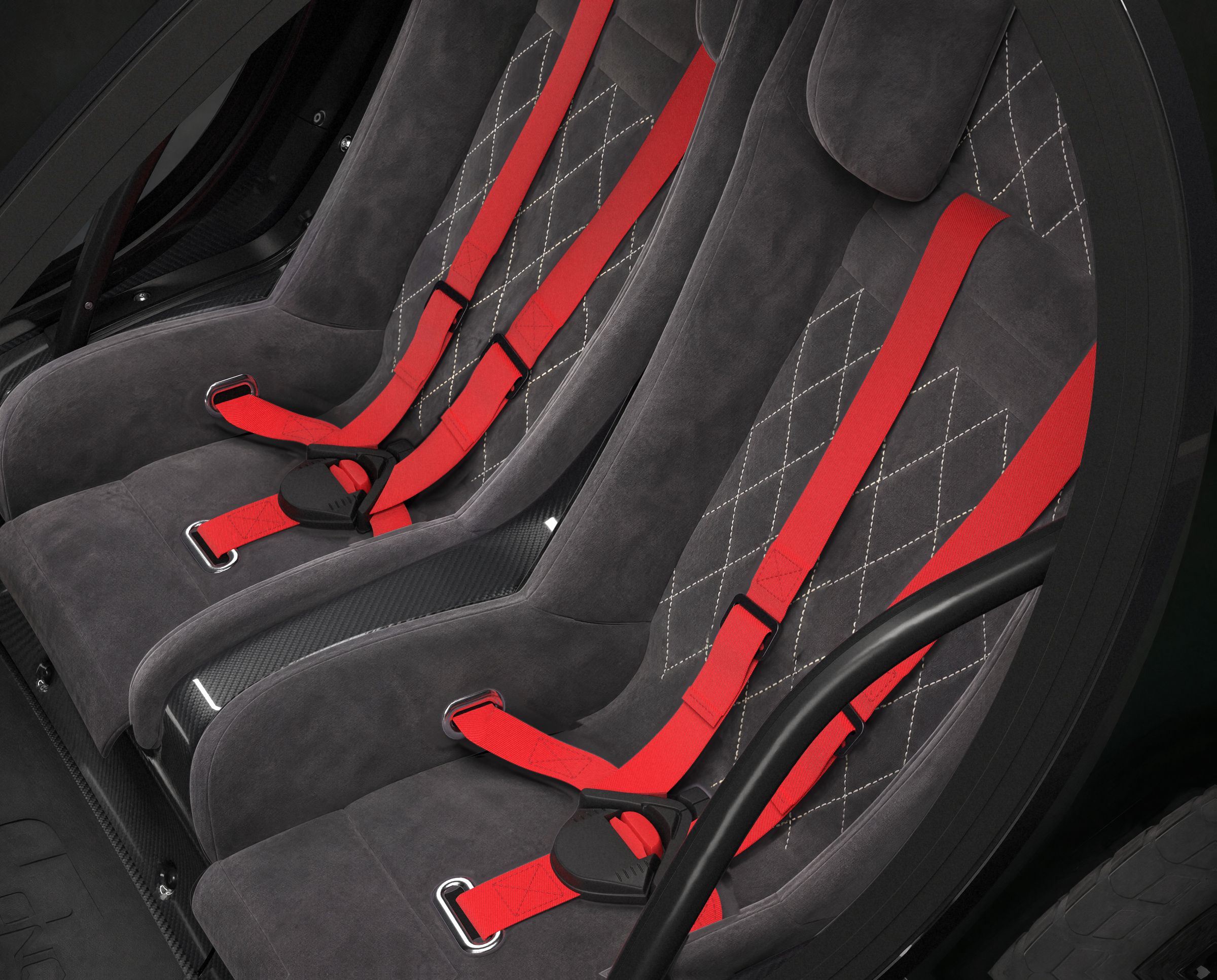
A view from above into the Mono-Q’s shell: two individual seats side by side with anthracite Alcantara covers and light diamond stitching, red five-point harnesses with black buckles, and the carbon centre divider between them.

2 individual seats, heated

The details

In the end, what counts is what your child feels.

A seat that warms when the morning is cold, as standard. Suspension that smooths the old town’s cobbles. A red five-point harness in each seat, 32 mm wide, with a buckle like a car seat’s. And three wheels of carbon or magnesium, the jogger wheel included.

“Your child says thank you.”

Dominik Dierkes, Founder
Seats
Two, each up to 22 kg
Harnesses
Five-point, 32 mm wide, red as standard
Seat heating
Standard, in both seats
Wheels
Carbon or magnesium

See for yourself.

At the Flagship Store on Roggenmarkt you can see the result up close. Book an appointment, or write to me with your technical question.

How would you like to reach us?

1 / 2 Day and time

November 2026

Loading open times

No time that suits you?

All times are German time.