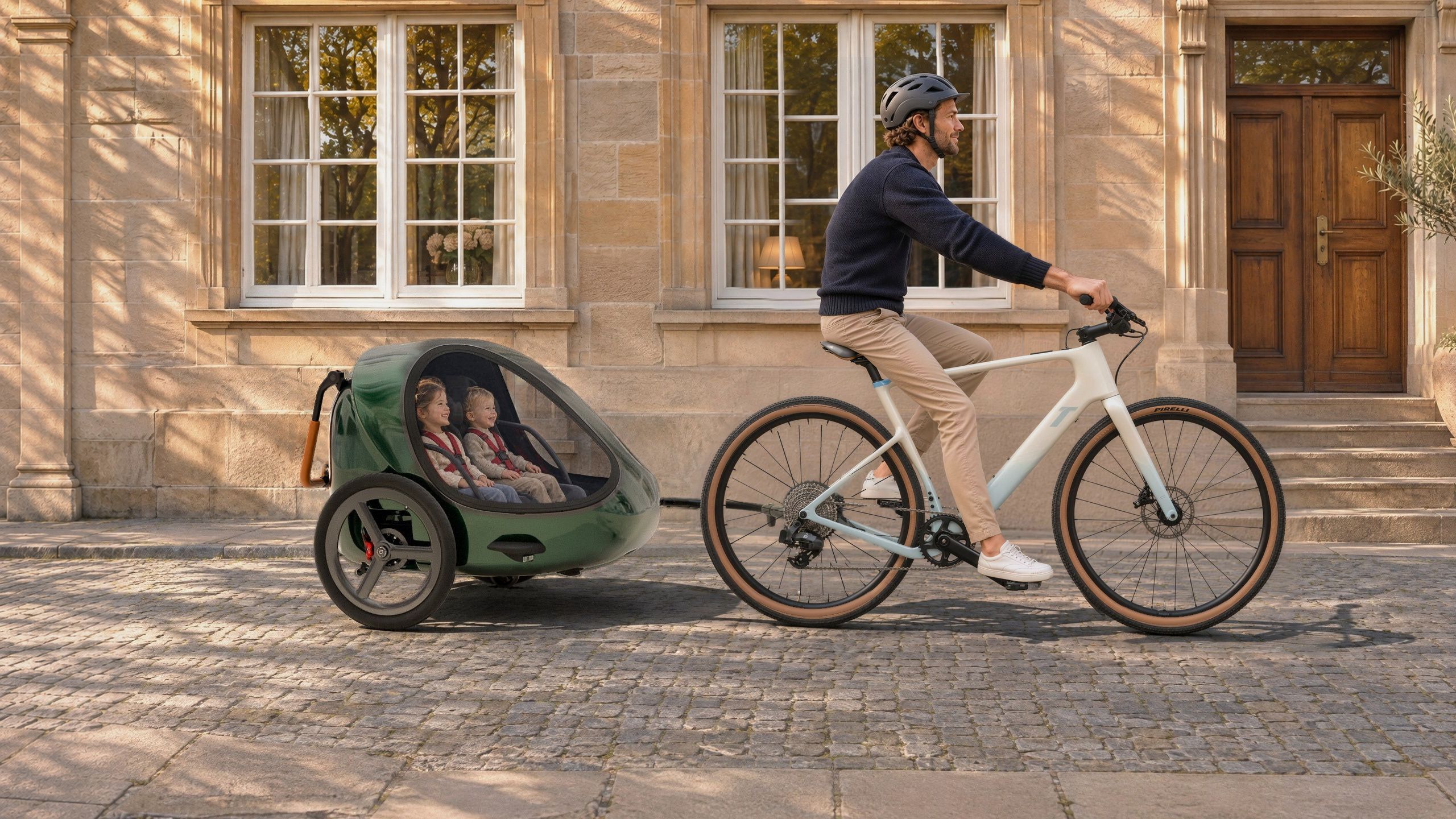
Bike trailer safety
A shell that surrounds. Harnesses that hold. Lights that are seen. In every mode, at any hour.
More than required.
Before a Mono‑Q carries your child, it has to prove what it can do. As a bike trailer, a jogger and a buggy: each mode has its own rules, and the Mono‑Q is tested to every one. An accredited laboratory also repeated the standards test as a bike trailer. And we went further than any standard asks: in the endurance run it lasted two and a half times its service life, with 20 per cent overload. Choose how you ride.
10 standards apply to the Mono-Q
Riding and construction
DIN EN 15918 2011+A2:2017
Bike trailer
Coupling, brakes, stability and harnesses on the bike, as trailer type C2. Two children, each up to 22 kg.
Bike trailer
DIN EN 1888-1 2018+A1:2022
Pushchairs
Brakes, tip-over stability, harnesses and durability when pushed, for children up to 15 kg.
Buggy,Jogger
DIN EN 1888-2 2018
Pushchairs for older children
Additional tests for children over 15 and up to 22 kg.
Buggy,Jogger
DIN EN 1888-3 2024
Pushchairs for leisure sports
Additional requirements for jogging and skating.
Jogger
Road traffic
StVZO § 67a
Lighting on the bike trailer
White reflectors at the front, red reflectors and a rear light at the back, reflectors on the wheels.
Bike trailer
Materials and skin
OEKO-TEX Standard 100 Product class I
Textiles for babies and toddlers
Covers, harnesses and padding are tested for harmful substances.
Bike trailer,Jogger,Buggy
DIN EN 71-3
Migration of certain elements
Paint and surfaces within children’s reach are tested for the release of heavy metals.
Bike trailer,Jogger,Buggy
REACH Annex XVII Regulation (EC) 1907/2006
Restricted substances
No banned plasticisers, PAHs or azo dyes in materials or paint.
Bike trailer,Jogger,Buggy
Product safety
DIN EN 71-1
Mechanical safety
Edges, small parts and pinch points within children’s reach are tested.
Bike trailer,Jogger,Buggy
GPSR Regulation (EU) 2023/988
General product safety
Risk assessment, traceability and safety information for every Mono-Q.
Bike trailer,Jogger,Buggy
Safe all round.
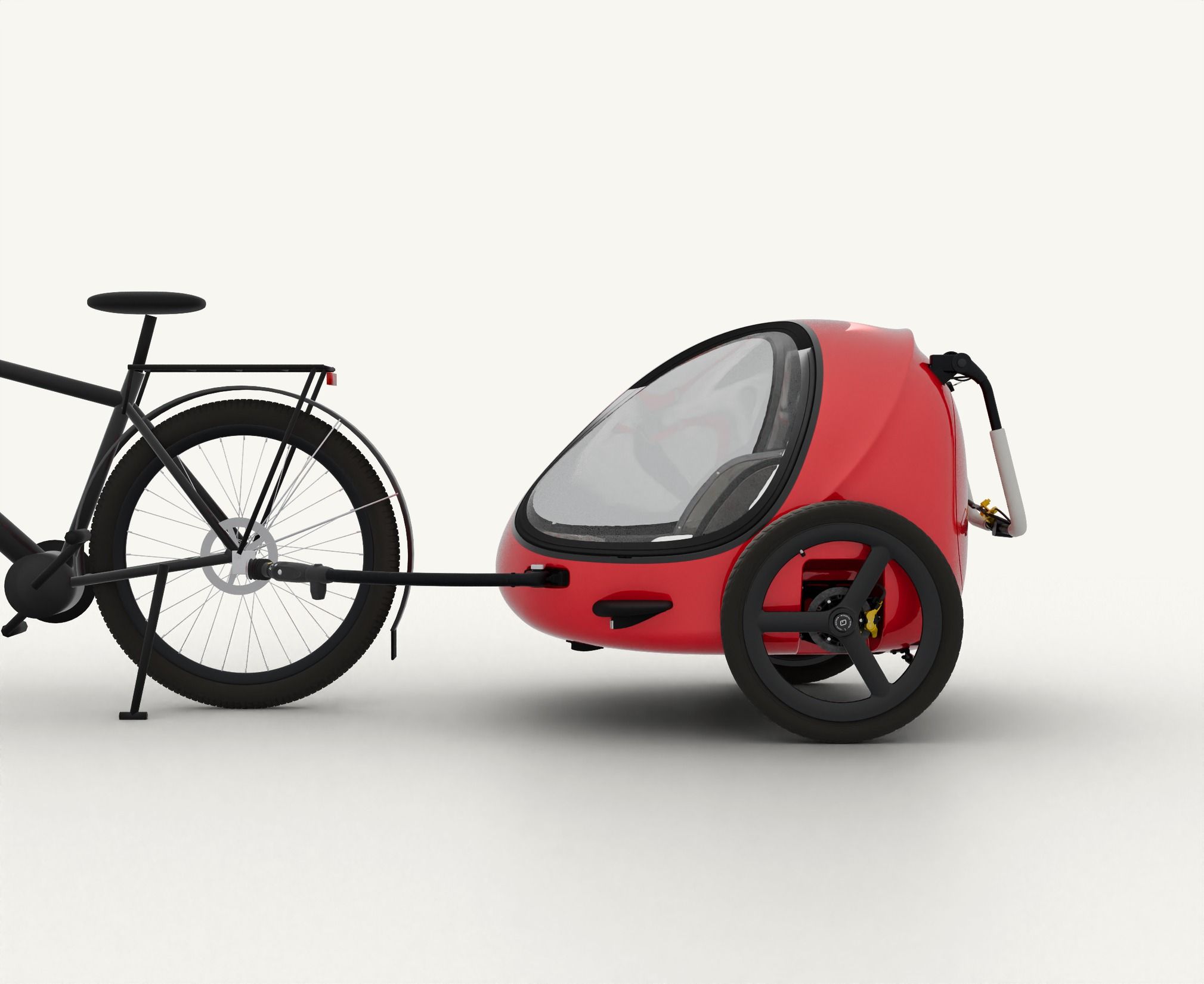
Every detail has one task: that your child arrives safely. Choose a point on the Mono‑Q or in the list and see what it does.
-
A carbon safety cell around both shell seats, built on the model of a racing car: one piece, no hinge. Its core of high-strength foam spreads the energy of an impact. And the shell encloses your children completely.
-
Each child has their own five-point harness, 32 millimetres wide, with a buckle like a car seat’s. It holds shoulders and pelvis and adjusts with one hand.
-
Every fabric your child touches is tested to OEKO-TEX.
-
When jogging and downhill, you brake without letting go of the bar. With a wrist strap.
-
Hydraulic disc brakes on both rear wheels, strong and low-maintenance, precisely controllable even fully loaded on a slope.
-
Built into the brake lever. One move, and the Mono-Q stays safely put, even on a slope.
-
In headlights, they light up from far away.
Seen at night.
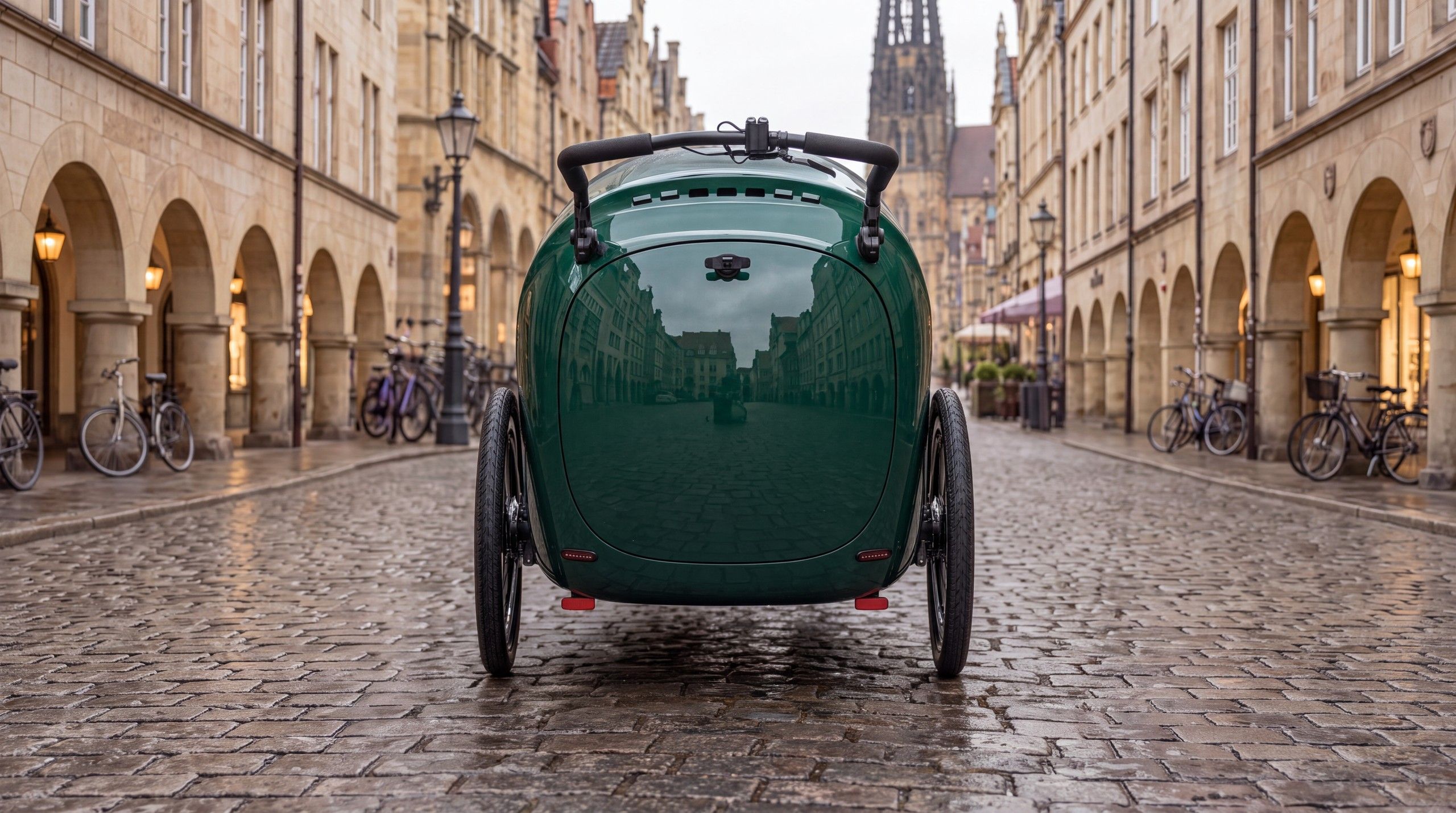
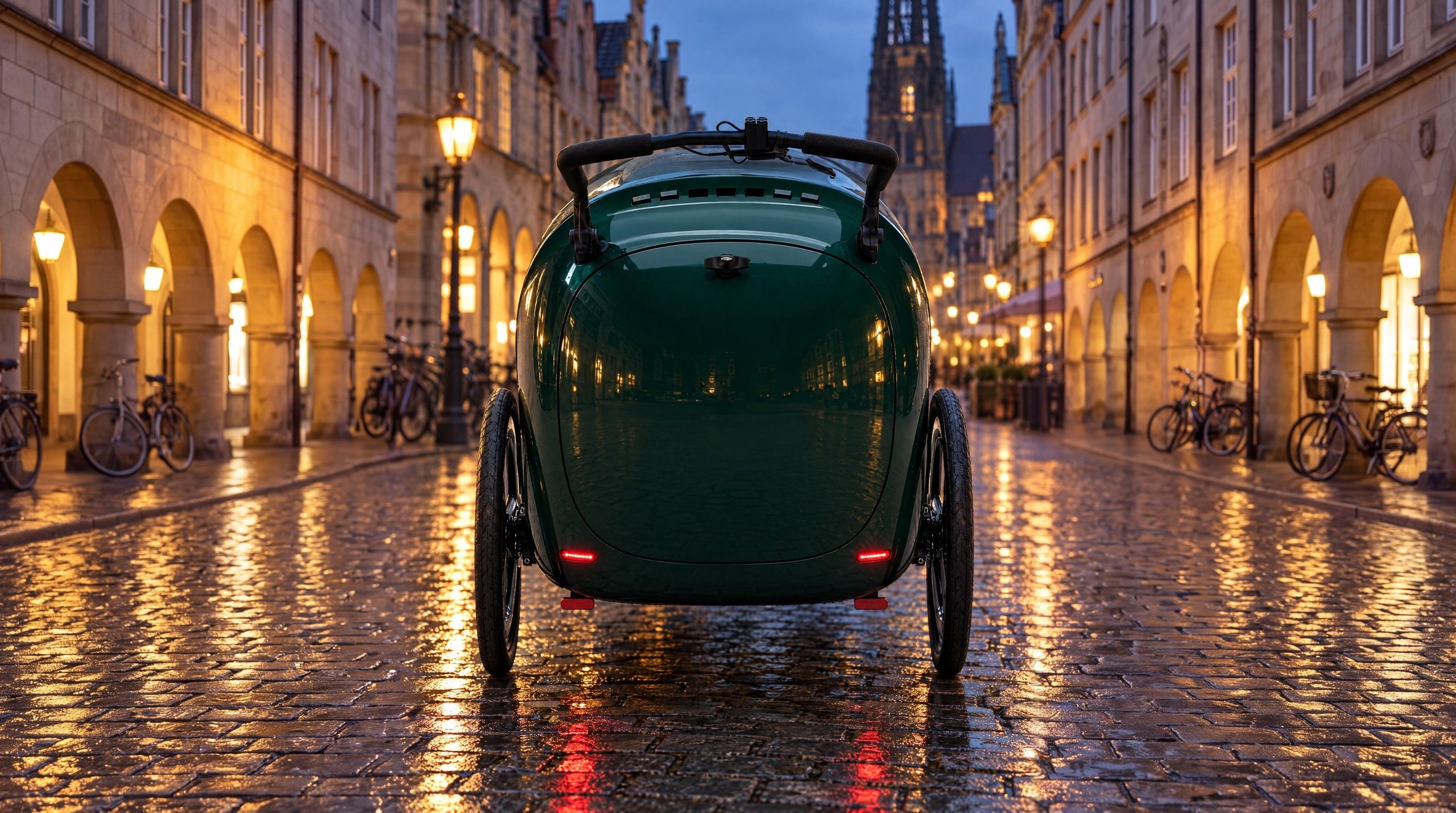
In headlights, the reflectors light up at the rear and front.
What parents ask us.
The most common questions, answered honestly.
Isn’t carbon brittle?
The shell works like a helmet: it spreads an impact across its whole surface, and its core of high-strength foam absorbs the energy. In our failure analysis, every conceivable cause also has a countermeasure.
How stable is the Mono-Q?
The seats sit low between the wheels, the centre of gravity is low, and the suspension smooths out bumps. That keeps it calm in bends and over kerbs. And the shell surrounds your children completely, each in their own harness.
What does my child come into contact with?
Easy-care, hard-wearing covers, fabrics tested to OEKO-TEX and low-emission paint.
How was the Mono-Q tested?
Harder than any standard. On the test rig, the complete Mono-Q ran with 20 per cent overload until it had covered two and a half times its service life. Then came the standards test, repeated externally, tests for corrosion, water and electronics and a crash test at the independent test laboratory CTS Münster. There, for the first time, a biofidelic child dummy rode in a bike trailer: developed by CTS especially for us and modelled particularly realistically on a child’s body. Studies assume 7 to 12 km/h in city traffic. We tested at 30 km/h, without braking, from behind and from the side, and the Mono-Q passed with flying colours: all values stayed below critical levels, the head load in the green range. Even Formula 1 tests its racing cars only a little faster: at 39 km/h at the rear, 36 km/h at the side.
Why doesn’t it fold?
Because the shell is one piece, with no hinge, so it stays a closed cell in every mode. Dominik Dierkes, our founder, puts it this way: “Who would want to ride on the motorway in a folding chair?”
Can people see us in the evening?
Reflectors at the front and rear light up in headlights, and as a trailer it carries a rear light. Switch to night above.
Experience it yourself.
The Mono‑Q makes its own case best in person. Seat your child in it, feel how calmly it rolls, and ask us anything. At the Flagship Store in Münster or by video. We are glad to show you the test report.
November 2026
Loading open times
No time that suits you?
All times are German time.